
RAISIN BUN
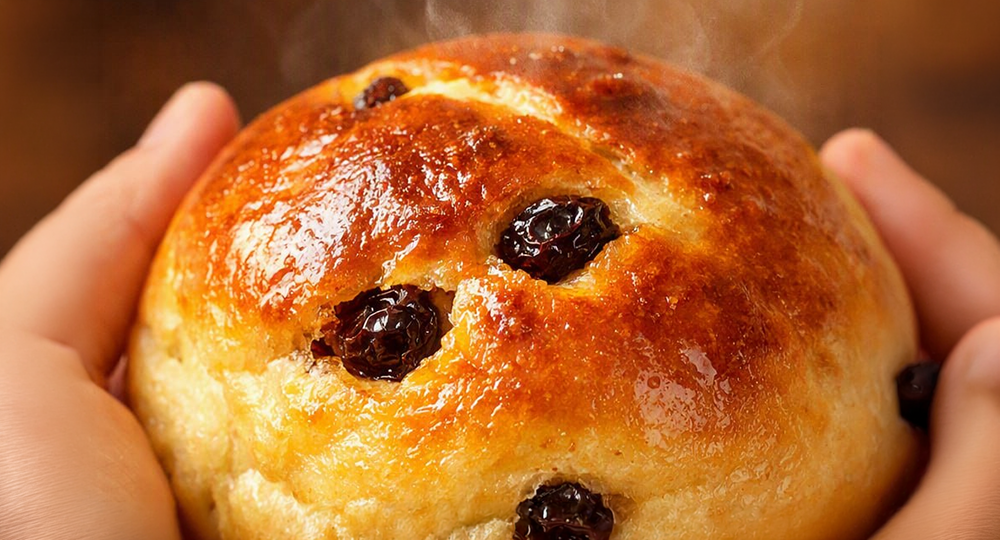
Rich and golden, with beautifully browned sides, still holding the heat of the oven.
You cradle it between both palms and eagerly examine it from every angle.
There is only one goal: to find the perfect spot for the first bite.
That very spot where, beneath the glossy golden crust, a round, wrinkled raisin peeks out, dark and tantalizing.
A breath in.
A wide, childish bite with two rows of sharp little teeth.
The teeth crack through the sweet, crisp dome, sink into the soft, springy dough, and split open a juicy raisin, plumped by the heat inside the bun.
A rich, spicy-sweet bouquet of sun-drenched summer explodes in your mouth.
Then the hunt begins.
Every bite that follows is carefully calculated: you must eat the dough in such a way that the raisins last until the very end.
The greatest tragedy is an empty, raisinless side where the baker has “skimped” on the fruit.
Grandma made the very best buns.
She would sigh under our relentless pressure and add generous handfuls of soaked raisins to the mixing bowl, although she always grumbled:
“Put in too many and you’ll ruin the dough. You’ll lose your taste for them once raisins stop being a celebration.”
When Grandma’s buns were gone, the hunt moved to the bread shop.
The main thing was to lie in wait for the gray van, just as its doors were flung open and glossy loaves and pastries were unloaded on wooden trays.
You would snatch up a hot bun that scorched your fingers, immediately buy a ten-kopeck milk ice cream from the kiosk next door—and eat them together, alternating bites.
Scalding-hot bread and ice-cold milk.
And let anyone try to compare that with the limp, cottony pastries from the supermarket.
Sealed in a cellophane bag.
With grapes printed on the package.
And an honest admission on the label:
“Nature-identical flavouring.”
G Un, 2026